Assembly tightening torques in stud welding
On this page
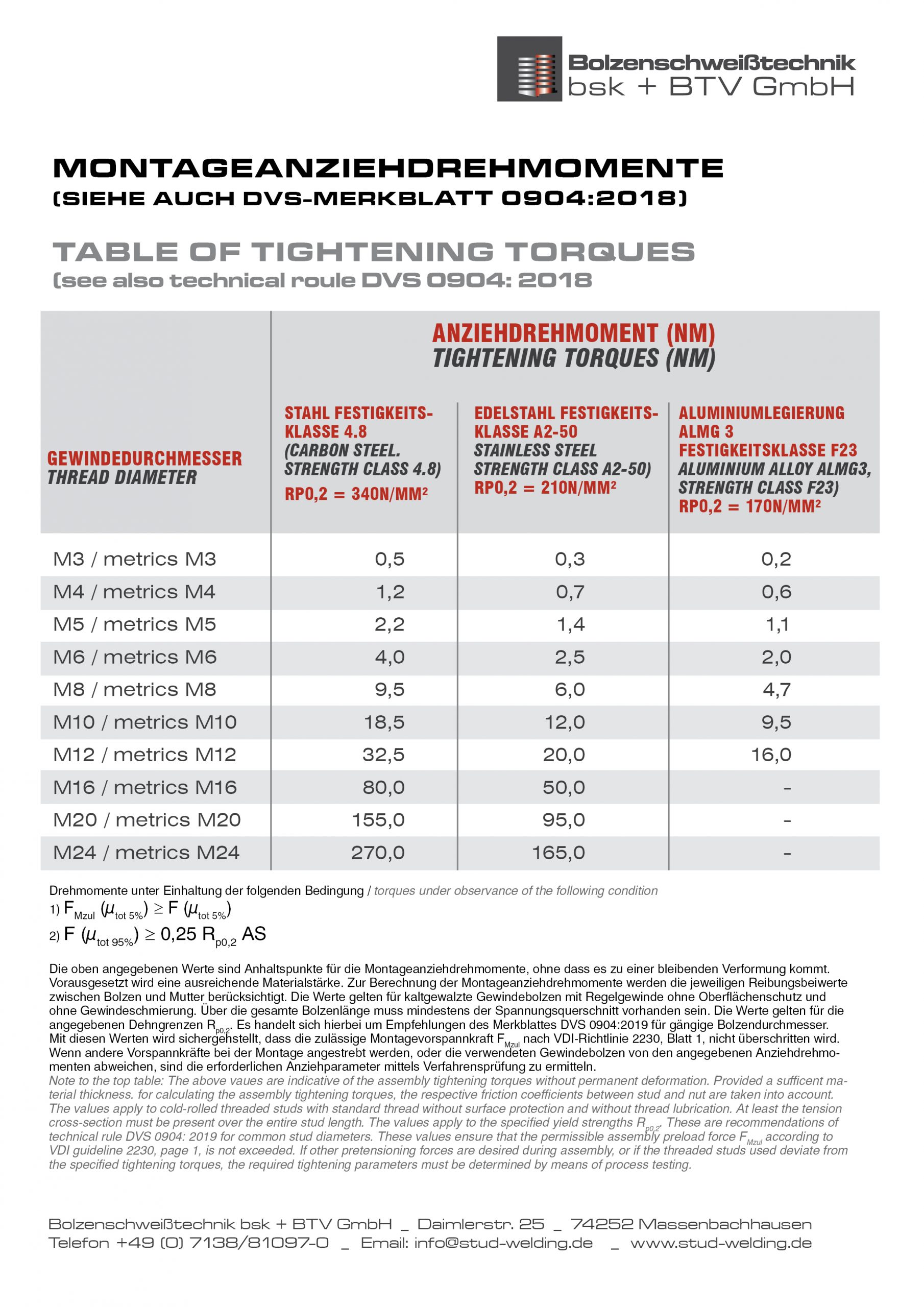
Technical overviewAssembly tightening torques for steel, stainless steel and aluminium welding studs
Technical overview
Assembly tightening torques in stud welding largely determine the mechanical load-bearing capacity and safety of a bolted connection in practice. The forces a welding stud can withstand permanently after joining depend greatly on thread diameter and the materials used. In this technical section, Bolzenschweißtechnik bsk + BTV GmbH provides a verified overview for designers, planners and quality inspectors in industrial sheet metal processing. To monitor these mechanical loads and automated processes in accordance with standards, all joints must meet strict criteria. Detailed regulatory requirements can be found on our information page about DIN standards in stud welding .
Assembly tightening torques for steel, stainless steel and aluminium welding studs
The table shows assembly tightening torques in Nm for steel, stainless steel and aluminium welding studs. These torques must be distinguished from tensile forces and test torques. The original table refers to DVS 0904. Its use requires the conditions stated in the table to be met, particularly regarding material strength, thread condition and loading. Appropriate values for differing conditions must be established separately.
Questions about assembly tightening torques, suitable values for special threads or your specific application in operation? Simply email info@stud-welding.de – the experienced team at Bolzenschweißtechnik bsk + BTV GmbH will be happy to provide individual, non-binding advice.